Origins & Ideology
Communism as a modern political movement began with the writings of Karl Marx and Friedrich Engels in the mid-19th century.
Core ideas from the Manifesto — abolition of private property, class-based analysis of society, and the need to dismantle existing institutions — continue to appear in contemporary activist language and policy proposals.
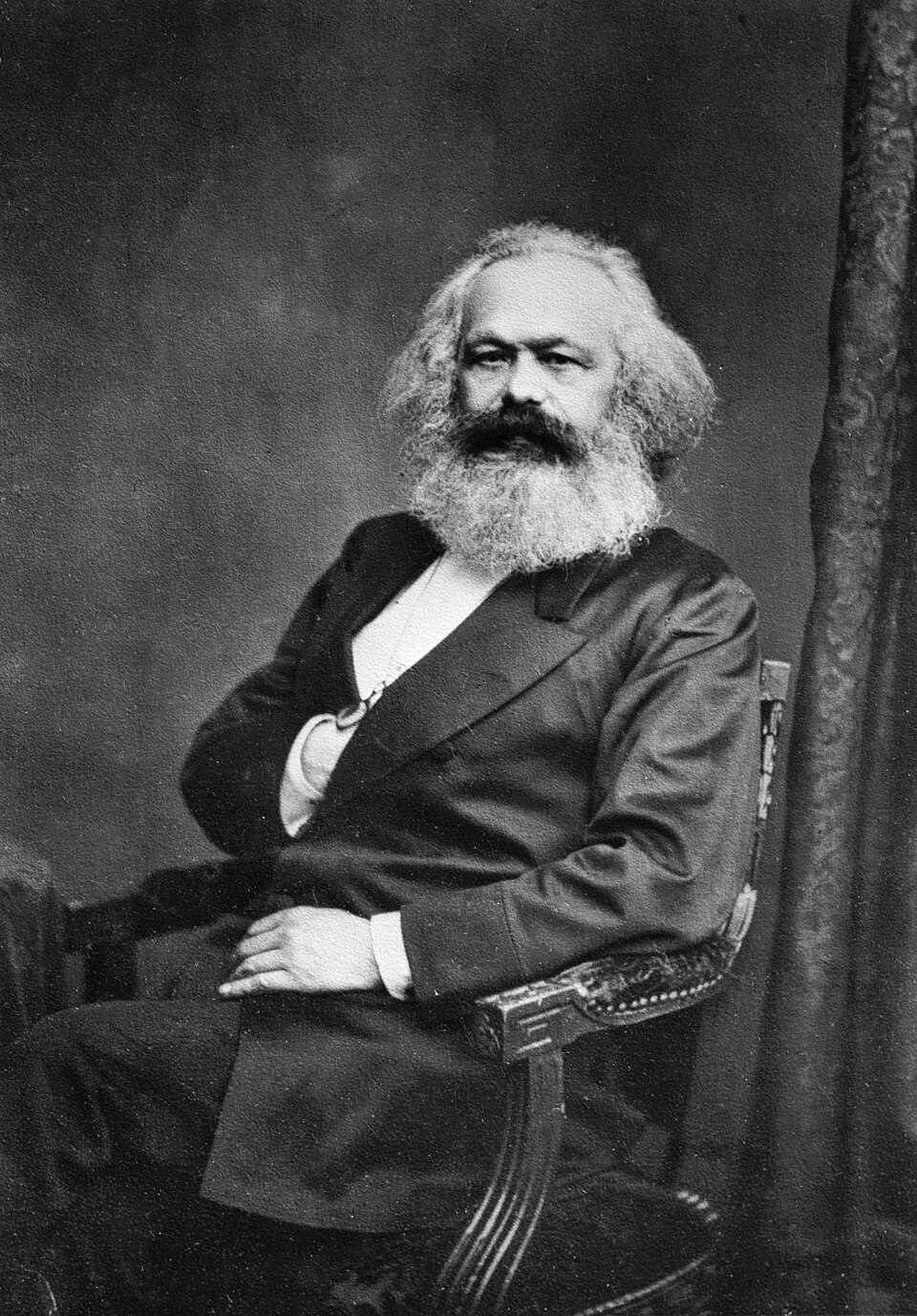
Karl Marx and Friedrich Engels
Marx (1818–1883) and Engels developed a theory of history centered on class struggle. In their view, the history of all existing society is the history of struggles between oppressors and oppressed. They argued that capitalism would inevitably be overthrown by the proletariat (working class), leading to a classless, stateless society — communism.
“The history of all hitherto existing society is the history of class struggles.”
“The Communists openly declare that their ends can be attained only by the forcible overthrow of all existing social conditions.”
More Key Quotes from Marx and Engels
“The theory of the Communists may be summed up in the single sentence: Abolition of private property.” — Communist Manifesto
“The proletariat will use its political supremacy to wrest, by degree, all capital from the bourgeoisie, to centralise all instruments of production in the hands of the State...” — Communist Manifesto
“...the state is nothing but a machine for the oppression of one class by another.” (Later elaborated in their correspondence on the need for revolutionary dictatorship.)
Key Ideas
- Abolition of private property in the means of production
- Class struggle as the engine of history
- Dictatorship of the proletariat as the necessary transitional stage
- Internationalism — workers of the world unite
- Belief that the state would eventually “wither away” under true communism
Philosophical Influences on Marxism
Marx’s ideas did not emerge in isolation. He critically synthesized several major intellectual traditions of the 19th century.
Georg Wilhelm Friedrich Hegel saw history as the dialectical unfolding of the “World Spirit.” Marx kept the dialectical method of contradiction and resolution but rejected its idealism, grounding it in material conditions instead.
Ludwig Feuerbach argued that God is a human projection. Marx radicalized this into historical materialism: ideas and consciousness arise from material social relations, not the other way around.
Henri de Saint-Simon, Charles Fourier, and Robert Owen criticized capitalism and envisioned cooperative societies. Marx borrowed their critique of exploitation but condemned their ideas as “utopian” rather than scientific.
Adam Smith and David Ricardo’s labor theory of value became central to Marx. He argued that capitalists appropriate “surplus value” created by workers, revealing capitalism’s internal contradictions.
This synthesis produced Marxism’s core framework: a materialist philosophy of history, a labor-based critique of capitalism, and the prediction of inevitable proletarian revolution.
From Theory to Leninism
Vladimir Lenin adapted Marxism for the conditions of early 20th-century Russia. He argued that the working class would not spontaneously develop revolutionary consciousness, so a disciplined “vanguard party” of professional revolutionaries was required to lead the revolution.
“The history of all countries shows that the working class, exclusively by its own effort, is able to develop only trade-union consciousness...” — What Is to Be Done? (1902)
“The dictatorship of the proletariat is a most determined and ruthless war waged by the new class against a more powerful enemy... The dictatorship of the proletariat is a persistent struggle — bloody and bloodless, violent and peaceful, military and economic, educational and administrative — against the forces and traditions of the old society.”
Lenin’s key innovations included:
- The vanguard party as the instrument of revolution
- Democratic centralism (strict discipline once decisions were made)
- Imperialism as the highest stage of capitalism (justifying revolution in less industrialized countries)
- Immediate violent overthrow rather than waiting for “ripe” conditions
Why the Ideology Matters
The ideas themselves contained features that repeatedly produced authoritarian outcomes once power was seized:
- Rejection of private property and individual economic rights
- View of political opponents as class enemies to be eliminated
- Centralized control of the economy and society
- Belief that ends justify any means
“The weapon of criticism cannot, of course, replace criticism by weapons, material force must be overthrown by material force...” — Introduction to A Contribution to the Critique of Hegel’s Philosophy of Right (1844)
“We must be ready to employ trickery, deceit, law-breaking, withholding and concealing truth...” (Lenin, as quoted in various collections of his writings on revolutionary tactics)
These elements were not accidental additions by later leaders. They were present in the foundational texts and were implemented wherever communist parties took power.